
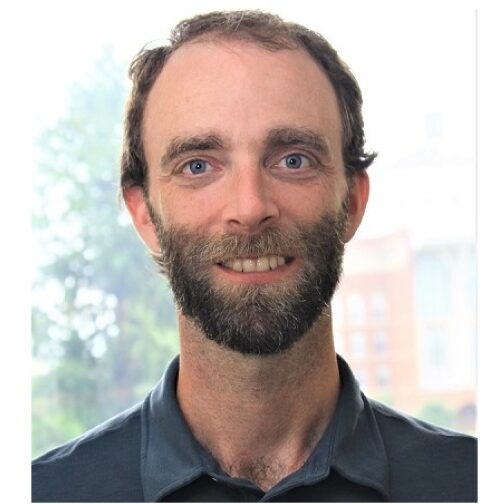
Dr. Ben Tobin
Ben first found caves as an undergraduate when he interned at Blanchard Springs Caverns, a US Forest Service commercial cave in Arkansas. From there, he fell in love with first understanding how caves have formed. As he learned more of the fragile nature of these systems, he wanted to do what he could to protect these beautiful and important systems.
After three seasons as an interpretation ranger, with first the US Forest Service and then the National Park Service, he moved to Western Kentucky University to complete an M.Sc. in Geoscience focused on understanding cave sedimentation. Ben worked for the National Park Service as a Cave Technician at Sequoia and Kings Canyon National Parks, where he worked on wide-ranging projects from impacts of fire on karst hydrology to monitoring cave invertebrates. Eventually, he conducted his Ph.D. research at Texas State University focused on understanding the role of mountain karst groundwater systems in the sustaining flow of mountain river systems.
With a passion for both research and resource management, Ben then works as a Post Doctoral Scholar at the Sierra Nevada Research Institute, UC- Merced as part of the Sierra Nevada Adaptive Management Project before taking the role as hydrologist and cave specialist for Grand Canyon National Park. While at the Grand Canyon, he conducted the first dye traces of the parks water supply, worked to understand the cave resources of the park with a focus on understanding paleontological resources and bat use of caves. He then left to work at the Kentucky Geological Survey as a Karst Hydrogeologist. His work in Kentucky focused on developing an understanding of karst to improve lives of people living in karst regions. Through research and outreach efforts, Ben worked to connect our understanding of cave biology, hydrology, and geology to find solutions to issues of living on and with karst.
Through all of this, Ben developed a broad background in resource management, hydrology, geology, and biology of cave ecosystems. Currently, he is focused on continuing to understand karst to ensure both humans and karst systems can continue to thrive.
Education
Ph.D., Aquatic Resources, Texas State University 2013
Masters of Science, Geoscience, Western Kentucky University 2007
Bachelor of Arts, Earth Science, University of New Hampshire 2002
Selected Recent Publications
Tobin BW, Miller BV, Niemiller ML, Erhardt AM (2024). Expanding karst groundwater tracing techniques: Incorporating population genetic and isotopic data to enhance flow-path characterization. Hydrology 11 (2), p. 23
Read More →
Bledsoe LA, Tobin BW, & Groves C (2022). Stronger together: Understanding and protecting karst resources. Carbonates and Evaporites 37 (1), p. 8
Read More →
Tobin BW, Polk JS, Arpin SM, Shelley A, Taylor C (2021). A conceptual model of epikarst processes across sites, seasons, and storm events. Journal of Hydrology 596, 125692
Read More →
BW Tobin, Springer AE, Ballensky J, Armstrong A (2021). Cave and karst of the Grand Canyon World Heritage Site; Cave and karst of the Grand Canyon World Heritage Site. Zeitschrift fur Geomorphologie Supplement 62 (3), p. 125-144
Read More →
Tobin BW, Hutchins BT, Schwartz, BF (2013). Spatial and temporal changes in invertebrate assemblage structure from the entrance to deep-cave zone of a temperate marble cave. International Journal of Speleology 42 (3), p. 4
Read More →
Tobin BW, Springer AE, Kreamer DK, Schenck E (2018). The distribution, flow, and quality of Grand Canyon Springs, Arizona (USA). Hydrogeology Journal 26 (3)
Read More →
Tobin BW, Schwartz BF, Kelly M, Despain JD (2015). Fire retardant and post-fire nutrient mobility in a mountain surface water—karst groundwater system: the Hidden Fire, Sequoia National Park, California, USA. Environmental Earth Sciences 73, p. 951-960
Read More →
Tobin BW, Hutchins BT, Schwartz, BF (2013). Spatial and temporal changes in invertebrate assemblage structure from the entrance to deep-cave zone of a temperate marble cave. International Journal of Speleology 42 (3), p. 4
Read More →
To see Ben’s complete publication record, visit his Google Scholar profile.